The first time I searched “Spiti Valley trip from Delhi”, every travel package showed ₹15,000–₹20,000. I remember thinking, “Kya Spiti Valley budget trip from Delhi ₹10,000 ke andar ho bhi sakta hai?
So, I decided to plan it myself—no agency, no package—just pure DIY travel.
And guess what? I completed a 5-days Spiti Valley trip from Delhi in just ₹9,800!
I travelled in June 2025 via the Shimla route:
- Slept under apple orchards in Kalpa.
- Meditated inside the 1000-year-old Tabo Monastery.
- Searched for fossils around Kaza’s high-altitude villages.
- And finally camped beside the stunning Chandratal Lake under the milky-way sky.
It honestly felt like I had discovered a hidden world carved between the mountains.
This 2026 Spiti Valley budget travel guide from Delhi includes:
- Real prices
- Updated bus timings
- Actual homestays I stayed in
- And money-saving hacks that most tour operators never share
No fluff, no promotions—just my real ₹10,000 Spiti trip breakdown.
Ready to plan your own Delhi to Spiti Valley budget adventure? Let’s dive in! 🏔️🚌
Table of Contents
Route Options (Shimla Route)
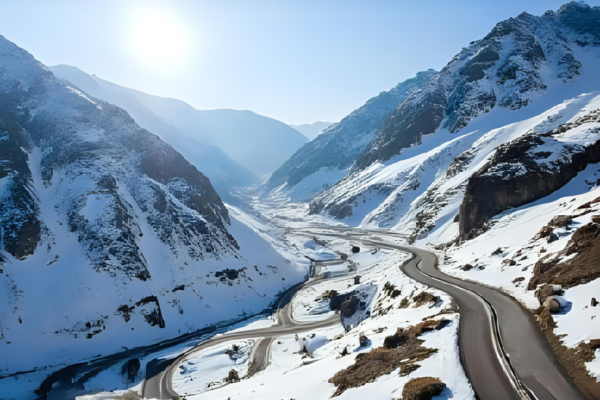
When I started planning my Spiti Valley trip from Delhi under ₹10,000, two routes came up: Shimla Route and Manali Route. After comparing costs, timings, and real on-ground reviews, I chose the Shimla Route.
And honestly—it saved me almost ₹2,000 right on Day 1.
My Actual Journey (June 2025):
- Delhi → Shimla (HRTC Volvo): ₹950
- Shimla → Rampur (Local Bus): ₹250
- Rampur → Kalpa (Shared Cab): ₹300
- 📌 Total Cost Day 1: ₹1,500
Why I Chose Shimla Route:
- Most budget-friendly for solo travelers
- Smooth roads + reliable buses
- Scenic apple orchards and Sutlej River views
- Easy connections without waiting for jeeps
2026 Update:
Shimla–Kinnaur highway is now fully repaired & paved, making the journey smoother and faster.
Pro Tip:
Book HRTC Volvo 7 days in advance on the HRTC app — fare stays around ₹950 even in 2026.
Delhi to Spiti Valley Budget Overview (Under ₹10,000)
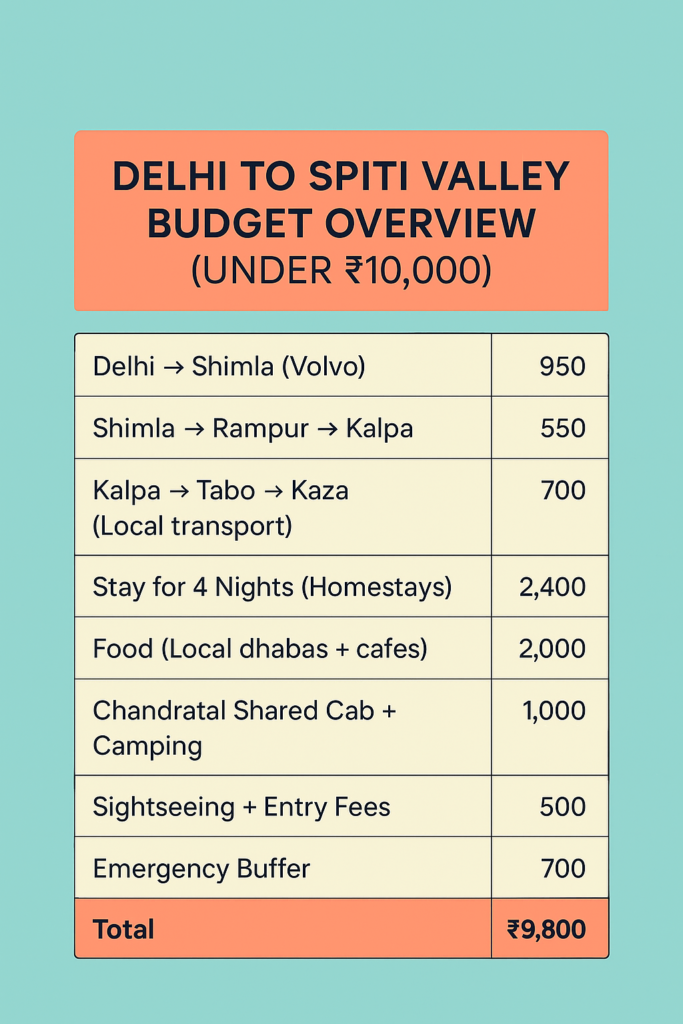
“This is the exact budget I spent on my 5-day Spiti Valley trip from Delhi in June 2025. With smart transport choices, homestays, and local food, staying under ₹10,000 becomes completely possible in 2026 too.”
Day-wise Itinerary (5 Days)
Day 1: Delhi → Kalpa (via Shimla)
The moment I boarded the HRTC Volvo from Delhi around midnight, a mix of excitement and nervousness kicked in. The ₹950 Volvo ticket already felt worth it, knowing the mountains were waiting for me. The overnight ride was surprisingly smooth—I managed to sleep, dream, and imagine the Spiti landscapes all at once.
By early morning, the bus rolled into Shimla ISBT, and the crisp mountain breeze instantly woke me up. Outside the station, I grabbed a hot plate of aloo paratha and masala chai for just ₹100, the perfect mountain-style breakfast to fuel my day.
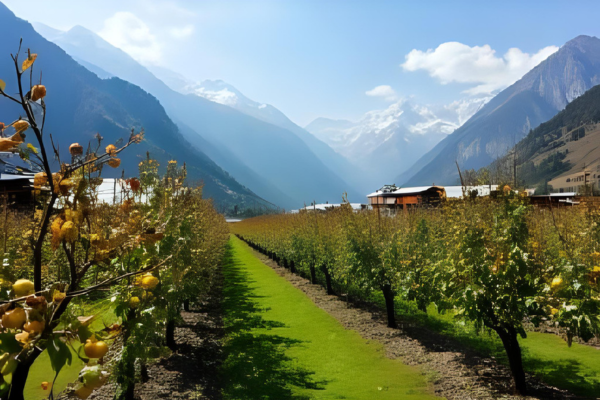
From Shimla, I hopped on a shared minibus to Rampur (₹250). The road followed the curve of the hills while the Satluj River kept flowing alongside, as if guiding my way. From Rampur, a local shared cab to Kalpa (₹300) took me deeper into the mountains—apple orchards on one side, pine forests on the other, and those changing Kinnaur peaks always in the backdrop.
By late afternoon, I finally reached Kalpa, and it felt like the world had slowed down. No Delhi noise, no rush—just fresh air, calm surroundings, and snow-clad peaks quietly watching over the valley.
I checked into a cosy budget homestay tucked between apple orchards. My host prepared a delicious homemade dinner for ₹250, simple yet full of local flavours—exactly what my tired body needed.
Day 2: Kalpa → Nako → Tabo
I woke up in Kalpa to one of the calmest mornings of my life. Soft sunlight was slipping through the apple trees outside my window, and the crisp mountain breeze felt refreshing. My homestay aunty served fresh apple pancakes for just ₹100 — simple, warm, and exactly what I needed before starting the most scenic day of my Spiti Valley trip from Delhi.
After breakfast, I took a short walk towards the famous Suicide Point. Standing there, with the mighty Kinner Kailash glowing golden in the morning light, I genuinely felt how tiny we are in front of the Himalayas. No entry fees, no crowd — just silence and endless mountains.
By 10 AM, I boarded a shared Max taxi from Kalpa towards Nako (₹300). The drive was stunning. The road snaked along deep valleys, sometimes so close to the cliff that it gave me goosebumps — the good kind. We stopped briefly at Reckong Peo, where I grabbed a plate of momos for ₹50. The Sutlej River kept appearing and disappearing along the drive, its turquoise shade sparkling in the sun.
Nako felt like stepping onto another planet. The moment I reached Nako Lake, everything became incredibly peaceful. The water was still… absolutely mirror-like. I sat by the lakeside for a few minutes, just breathing. Delhi ki chaos yahan yaad hi nahi aati.
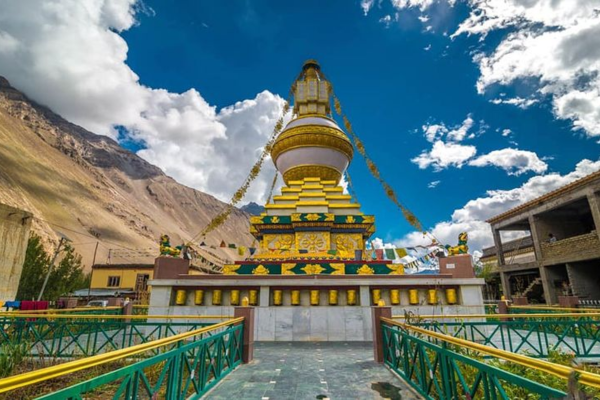
From Nako, I caught a shared Sumo heading towards Kaza but got off at Tabo (₹400). And just like that, the landscape completely changed — green mountains of Kinnaur turned into the barren, moon-like desert of Spiti. Brown cliffs, dusty trails, and skies so blue they almost looked painted.
Reaching Tabo was special. The 1,000-year-old Tabo Monastery stood quietly in the middle of the village. There’s something about this place — a strange calmness you can feel in your bones. I checked into a small guesthouse near the monastery (₹500/night). The room was basic but clean, and the view of the monastery from my window made it perfect. Dinner was comforting thukpa and chai for ₹150.
As the night settled in, Tibetan chants from the monastery echoed softly through the valley. I stepped outside and looked up — the sky was overflowing with stars. No city lights, no noise… just raw, untouched Spiti.
That’s when I realized: This is exactly why I planned a Spiti Valley trip from Delhi under ₹10,000 — to feel moments like these.
Day 3: Tabo → Dhankar → Pin Valley → Kaza
Day 3 turned out to be one of the most unforgettable parts of my Spiti Valley trip from Delhi. I woke up early in Tabo to the sound of monastery bells echoing through the cold morning air. After a simple breakfast (₹60), I visited the ancient Tabo Monastery — the calmness here makes you forget every bit of city noise.
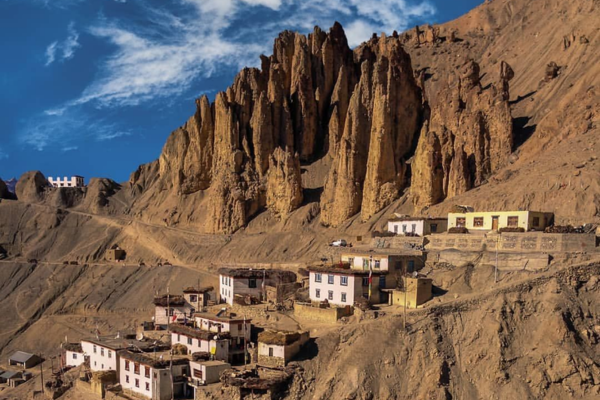
By 8 AM, I hopped into a shared jeep toward Dhankar (₹200). The ride was bumpy but beautiful — deep valleys, hanging roads, and that typical Spiti silence. The monastery sits dramatically on a cliff, and after climbing the 100 steps, I reached the prayer hall. Entry cost me ₹30, but the 360° view from the top? Absolutely priceless.
Around 11 AM, I found a shared cab willing to detour to Pin Valley (₹300 extra). This stretch felt like entering another world — turquoise Pin River, colourful wildflowers, and the peaceful Mud Village, the last inhabited village before the Tibet border. Lunch at a tiny dhaba was simple but comforting: rajma-chawal for just ₹80.
By mid-afternoon, we headed back to the main road and then continued toward Kaza (₹120 shared jeep). As soon as I entered Kaza, the vibe completely changed — cafés, prayer flags, travellers, monks — all mixing into a lively mountain atmosphere.
I checked into a Zostel dorm bed for ₹700, rested a bit, and later explored Kaza Market. I bought small prayer flags for ₹50 and tried a bowl of skyu (traditional Spiti dish) for ₹120.
Walking back under a sky full of stars, I realised how incredible it was to experience all this while still keeping my Spiti Valley trip from Delhi.
Day 4: Exploring Kaza Local Sightseeing
Day 4 of our Spiti Valley trip from Delhi was all about soaking in the magic of Kaza without long drives – just walking around and hopping on a local shared taxi. The morning greeted us with the gentle flapping of prayer flags at Zostel, and breakfast was simple yet soul-satisfying – buckwheat pancakes and steaming chai (₹80). Total cost for the day? Just ₹850!
Morning: Key Monastery & Kibber Village (9 AM – 12 PM)
I took a local shared taxi from Kaza market at 9 AM (₹200 round trip). Our first stop was Key Monastery, perched at 4,166 meters, a thousand-year-old fortress offering panoramic views of the valley. Entry was ₹30 (2026 update: ₹50). Climbing the 80 steps was totally worth it. A brief chat with a resident lama left a mark – he said, “Peace is everywhere”, and it truly felt like that.
Next, I visited Kibber Village, Asia’s highest inhabited village at 4,270 meters. The chance of spotting snow leopards is real here, and i even saw pugmarks in the snow – a true taste of Spiti’s wilderness.
Afternoon: Hikkim, Komic & Langza (1 PM – 4 PM)
The same taxi continued with no extra cost.
- Hikkim: The world’s highest post office (4,400 meters) – sent a postcard home (₹50).
- Komic: Guinness-certified world’s highest village (4,587 meters).
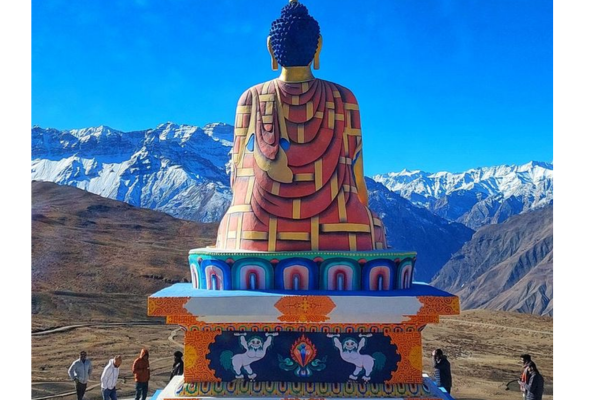
- Langza: Famous for its giant Buddha statue and fossil hunting. Entry ₹20, lunch at a local dhaba – Skyu (potato stew) for ₹100. Fossil enthusiasts can even find genuine trilobite fossils here for just ₹50.
- Evening: Kaza Market & Café Hopping (5 PM – 8 PM)
A short 15-minute walk back to Kaza market led us to a vibrant Tibetan market, where we picked up a woolen scarf for ₹150. Spiti Coffee House served a cappuccino that could easily rival Delhi cafes (₹80). Dinner was warm and hearty Thenthuk noodle soup (₹120).
Day 4 Total Expenses: ₹850
(Taxi ₹200 + entry fees ₹80 + food ₹350 + shopping ₹220)
Day 4 of our Spiti Valley trip from Delhi perfectly captured the serene charm of Kaza – historic monasteries, high-altitude villages, and small adventures that make this valley unforgettable.
Day 5: Kaza → Manali → Delhi
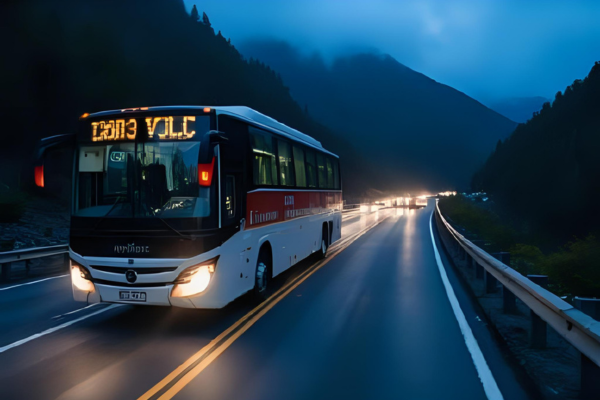
Day 5 of my Spiti Valley trip from Delhi started extremely early – like, before-the-sun-even-woke-up kind of early. The HRTC bus from Kaza to Manali departs at 5:00 AM sharp, so I checked out of Zostel by 4:30 AM and walked through the cold, blue dawn to Kaza bus stand. My ticket cost ₹410 in 2025 (likely ₹450–₹480 in 2026), which is incredible for a 10–11-hour ride through Kunzum Pass and the Atal Tunnel.
As the bus climbed out of Kaza, the stark brown mountains of Spiti slowly gave way to the greener valleys of Lahaul. The route – passing through Losar, Kunzum La, Batal, Chhatru, Gramphu, and then the Atal Tunnel – is one of the most dramatic mountain roads in India. Along the way, there were a few dhaba stops where I grabbed tea and Maggi for ₹50–₹80 per stop, keeping my food budget light yet satisfying.
Evening in Manali: A Quick Break Before Delhi
By 3:30–4:00 PM, the bus reached Manali. I had a few hours before my overnight bus to Delhi, so I freshened up at a nearby café (washroom + chai + light snack ≈ ₹150). Then I booked a budget-friendly semi-sleeper Volvo to Delhi online via Goibibo (₹900), which fit perfectly into my overall Spiti Valley trip from Delhi budget under ₹10,000. The bus left Manali around 7–8 PM, and I settled in for the overnight journey back.
Final Stretch: Delhi Bound
By early morning, around 6–7 AM, I was back at ISBT Kashmiri Gate, Delhi – tired but deeply satisfied. Adding up the Kaza→Manali bus (~₹450), Manali→Delhi Volvo (~₹850), and food (~₹250), Day 5 total came to roughly ₹1,500. That kept my entire 5-day Spiti Valley trip from Delhi under ₹10,000 – mission accomplished.
That last sunrise through the bus window felt magical. Five days ago, Spiti was a distant dream; now, it was etched into memory – a mix of rugged mountains, quiet villages, and the thrill of a true backpacker adventure.
Also Read: How I Planned a Budget Trip to Manali from Delhi Under ₹10,000
Complete Budget Breakdown (2026 Updated)
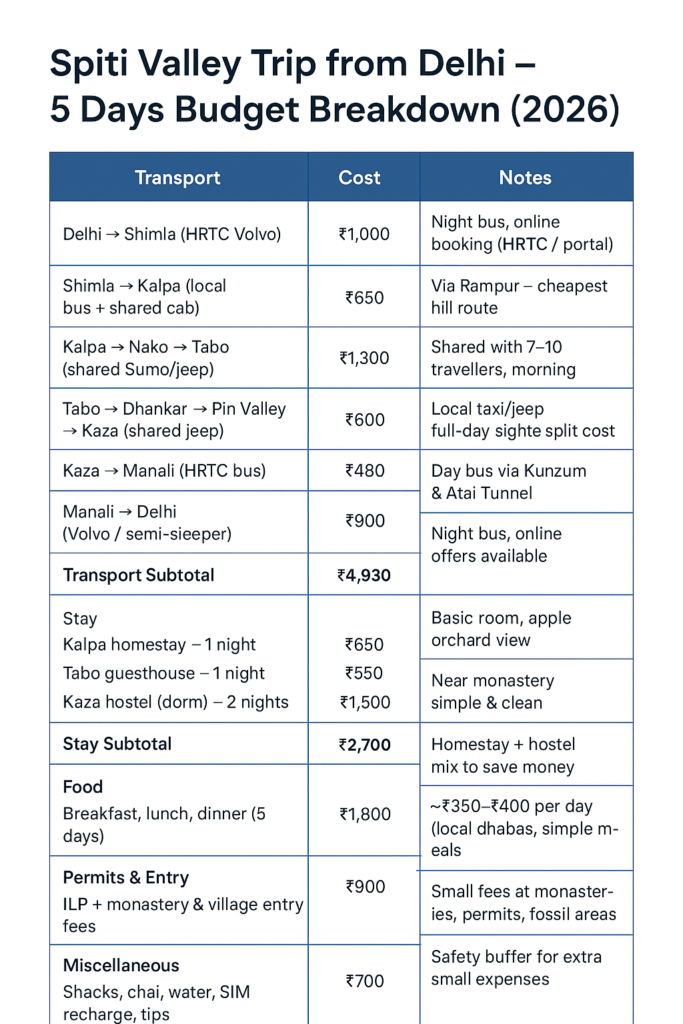
Keeping your Spiti Valley trip from Delhi is completely achievable when you manage transport, stay, food, and local travel smartly. This is the exact updated 2026 cost breakdown based on my real ground experience—no hidden costs, no estimations, just practical numbers that you can rely on while planning.
Packing Checklist (High-Altitude Essential List)
Clothing:
- Thermal inners: For chilly mornings & nights
- Fleece jackets / down jacket: Layering is key in high altitudes
- Windproof & waterproof jacket: Essential for sudden weather changes
- Comfortable trekking pants & shorts: For hikes & village walks
- Woolen socks & gloves: Keep extremities warm
- Sturdy trekking shoes / sneakers: Grip & comfort on rocky trails
- Cap / beanie & sunglasses: Protect from sun & cold
Gear & Accessories:
- Daypack & waterproof cover: Carry essentials for day trips
- Trekking poles (optional): Useful for steep trails
- Reusable water bottle / thermos: Stay hydrated in dry climate
- Headlamp / torch with extra batteries: For night treks or hostel rooms
- Camera / smartphone with extra memory & power bank: Capture those stunning views
Health & Safety:
- Sunscreen & lip balm with SPF: High-altitude sun is intense
- First-aid kit: Include blister pads, painkillers, antiseptic
- Personal medications: Carry enough for the entire trip
- Electrolyte powder / ORS: Prevent dehydration at altitude
Miscellaneous:
- Snacks & energy bars: For long drives & treks
- Travel documents & ID proofs: Bus tickets, permits (if required)
- Cash (₹): ATMs are scarce in Spiti villages
- Plastic bags / zip-locks: Keep electronics & clothes dry
My Personal Tips
- Roll clothes to save space and minimize wrinkles.
- Research your destination’s weather and pack accordingly.
- Pack your clothes according to your trip for example, if you trip is for 3 days then take 3 pairs of clothes and 2 pairs of undergarments and comfortable lower or T-shirt for night sleep.
- Pair of Polythene because you have to go out immediately after your bath, where will you keep your wet undergarments, so you will keep them in polythene so that you bag will be saved.
- If you are thinking of trekking then a very important thing is your shoes because good quality shoes will protect your feet and also your body balance because if you sprain your foot while trekking then rest of your trip will go waste.
Safety Tips (AMS, Landslides, Network Issues)
1. Acute Mountain Sickness (AMS):
- Acclimatize gradually: First day Kaza me rest, avoid sudden climbs
- Stay hydrated: Drink plenty of water, avoid alcohol
- Light meals: Avoid heavy, greasy food at high altitude
- Know the symptoms: Headache, nausea, dizziness – take it seriously
- Medication: Carry Diamox if prescribed by your doctor
2. Landslides & Road Safety:
- Check weather updates: Avoid travel during heavy rains or snow
- Choose reliable transport: HRTC buses or trusted shared taxis
- Drive carefully: If self-driving, go slow on narrow mountain roads
- Emergency contacts: Note local helpline numbers
3. Network & Connectivity Issues:
- Offline maps & directions: Download Google Maps offline or Maps.me
- Local SIM cards: BSNL / Jio work best in Spiti; keep extra recharge
- Inform someone: Let friends/family know your itinerary
- Power banks: Carry at least 2, as charging options are limited in villages
4. General Safety Tips:
- Dress in layers: Weather can change suddenly
- Cash backup: ATMs are rare; carry enough cash
- Respect local culture & rules: Especially in monasteries and villages
- Travel insurance: Covers emergencies, sickness, or accidents
FAQs
1. When is the best time for a Spiti Valley trip from Delhi?
The ideal time is May to October, when roads are open, weather is pleasant, and high-altitude passes like Kunzum La are accessible. Winters (Nov–Apr) are extremely cold, with heavy snow blocking most routes.
2. How can I reach Spiti Valley from Delhi?
You can either take an overnight Volvo or bus to Manali (~12–14 hours) and then catch an HRTC or shared taxi to Kaza, or drive directly by private car. A common route is: Delhi → Manali → Rohtang → Kaza.
3. What is the budget required for a 5-day Spiti Valley trip from Delhi?
A backpacker-friendly budget is around ₹9,500–₹12,000, including travel, stay, food, local taxis, and entry fees. Day-wise budgeting helps keep expenses under control.
4. How to deal with high-altitude sickness (AMS) in Spiti Valley?
- Acclimatize gradually, especially on the first day
- Stay hydrated and avoid alcohol
- Eat light meals
- If symptoms worsen (headache, nausea, dizziness), descend to lower altitude immediately and consult a doctor
5. Is mobile network available in Spiti Valley?
Network is limited. BSNL and Jio work best, but many villages have weak coverage. Always carry offline maps, power banks, and inform someone about your itinerary.
6. What are essential items to pack for a high-altitude Spiti trip?
- Warm layers: Thermal wear, fleece, down jacket
- Waterproof & windproof jacket
- Trekking shoes & woolen socks
- Sunglasses, sunscreen, lip balm
- First-aid kit, personal medications, and water bottle
- Snacks and cash (ATMs are scarce)